
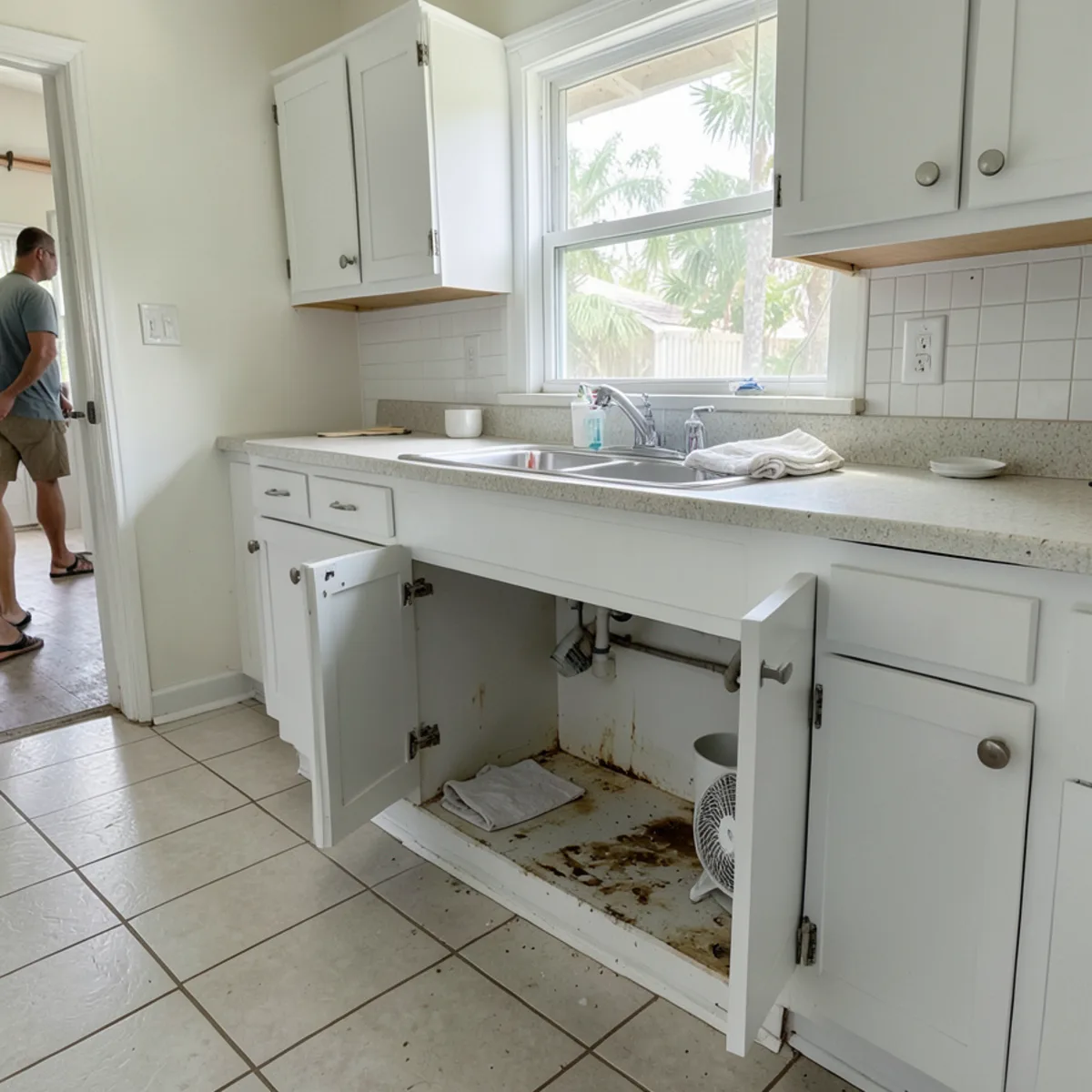
Can water damaged cabinets be saved? Some can and many cannot. Cabinets usually survive when the water was clean, the boxes are plywood or solid wood, and everything dried within a day or two; swollen particleboard, lingering musty smells or visible mold almost always mean replacement.
The real answer depends on what got wet, with what water, and for how long.
Florida adds its own pressure. High indoor humidity slows drying, and a slow leak under a sink can sit unnoticed for weeks in a seasonal home. The checklist below helps you sort what can stay from what has to go before you spend money on either.
Can Water-Damaged Cabinets Be Saved? Start With the Water Source
The source of the water matters as much as the amount. A burst supply line delivers clean water; a backed-up drain or a storm surge delivers contaminated water that soaks into the cabinet material along with whatever it carried.
| Water source | Typical example | Outlook for the cabinets |
|---|---|---|
| Clean water | Failed supply line, ice maker hose, faucet connection | Good if found quickly and dried within 24–48 hours |
| Gray water | Dishwasher overflow, sink drain leak | Fair; clean thoroughly and watch for odor and swelling |
| Contaminated water | Storm surge, river flooding, sewage backup | Poor for porous boxes; most are replaced |
Contaminated floodwater is a different problem with its own steps. If that is your situation, start with our guide on what to do first with flood-damaged kitchen cabinets.
Not sure what you are looking at? Call (239) 545-0550 and we can look at the cabinets during a technical visit.
Call (239) 545-0550Water-Damaged Particleboard vs Plywood vs Solid Wood
Box material is the second big factor. Most builder-grade cabinets in Southwest Florida use particleboard or MDF, which behave very differently from plywood once they get wet.
- Particleboard: swells at the edges and bottom, loses screw-holding strength and does not return to its original size after drying. A swollen cabinet base made of particleboard is almost never worth saving.
- MDF: holds paint well but swells and softens like particleboard; painted MDF doors often bubble or crack at the edges.
- Plywood: can delaminate if soaked for long, but often dries flat after a short, clean-water leak.
- Solid wood: may warp or show water stains, yet it can usually be dried, sanded and refinished.
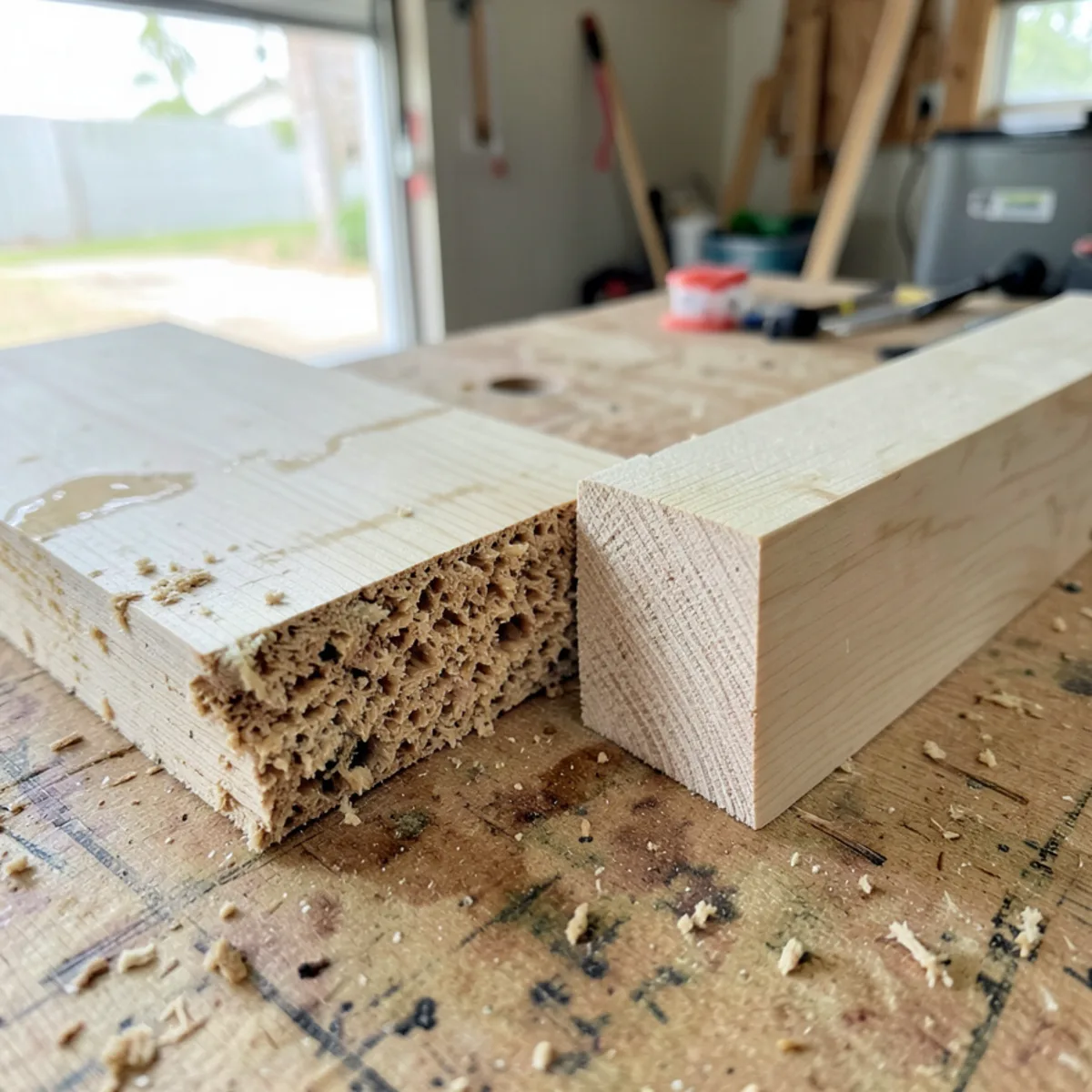
Look at a cut edge inside the sink base or behind a removed shelf pin to see what your boxes are made of. Doors and boxes are often different materials, so check both.
What Are the Signs of Mold in Cabinets?
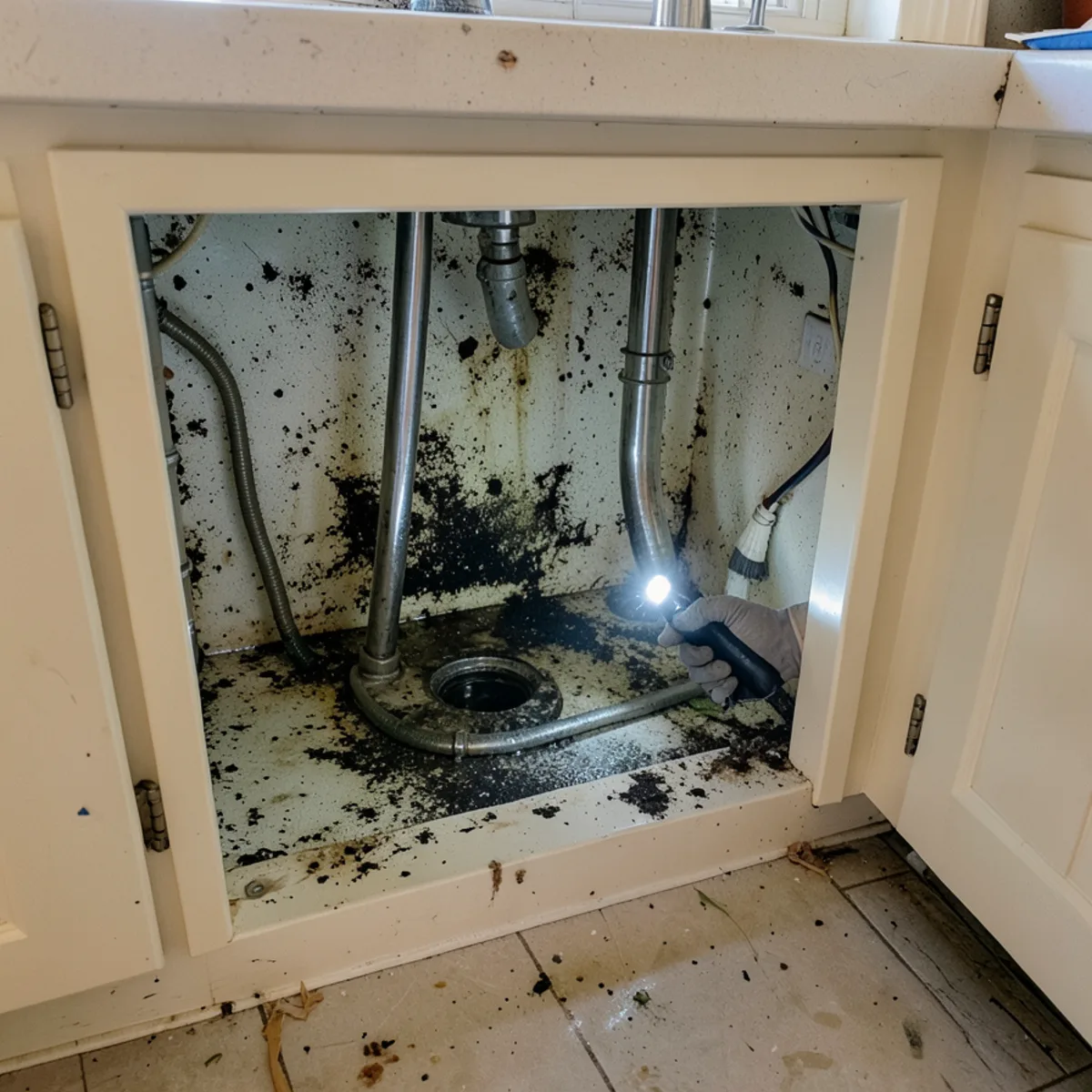
Mold needs moisture and time, and the inside of a closed cabinet in a humid house gives it both. These cabinet mold signs mean the problem has moved past simple drying:
- A musty or earthy smell when you open the doors, even after the area seems dry
- Black, green or white spotting on the cabinet floor, back panel or the underside of the countertop
- Soft or crumbling material where the cabinet meets the floor
- Peeling laminate or bubbling paint that keeps spreading
The EPA’s mold cleanup guidance says a homeowner can usually handle an area smaller than about 10 square feet, and that larger areas call for professional guidance. It also notes that porous materials with mold may need to be thrown away, because mold can grow into empty spaces and crevices.
Repair or Replace Cabinets: How Do You Decide?
- 1
Press the cabinet floor
A firm, flat deck can usually stay. A soft, bowed or crumbling one needs replacing, and the box often goes with it.
- 2
Check the sides at floor level
Swelling or splitting along the bottom few inches means water wicked up into the panels.
- 3
Open and close every door and drawer
Doors that no longer line up, or drawers that stick, point to a box that has twisted.
- 4
Look behind and below
With a flashlight, check the wall and floor behind the toe kick. Wet drywall or subfloor has to dry or be replaced before any cabinet work.
- 5
Decide piece by piece
One damaged sink base does not always condemn the kitchen, but matching a single new box to old doors is not always possible.
Bathrooms follow the same logic, with one difference: vanities are small enough that replacing the whole unit is often simpler than repairing it. See our water-damaged vanity replacement page for how that works.
Can You Replace Just the Damaged Part of a Cabinet?
Sometimes. A cabinet is a box, a face, a set of doors and a toe kick, and water rarely ruins all four equally. Partial repairs make sense when the damage stops at a part that can be unscrewed and swapped without disturbing the countertop.
| Damaged part | Usual partial fix | When it is no longer enough |
|---|---|---|
| Sink base floor | New floor panel cut to size and sealed, or a fitted liner over a sound deck | The side panels have swollen or the deck support rails are soft |
| Toe kick | New toe-kick board, ideally a removable clip-on type | Water has wicked into the box sides above the toe kick |
| Doors or drawer fronts | New fronts sized to the existing openings | The box behind them has twisted, so new fronts will not sit straight |
| Drawer box | New drawer box on the existing slides | Slides have rusted or their mounting screws have pulled out |
| One whole base cabinet | A new box sized to the opening, with the countertop supported during the swap | The new door cannot be matched closely enough to its neighbors |
The honest trade-off: partial repairs keep costs and disruption down, but they leave the rest of an older kitchen in place. If neighboring boxes are particleboard of the same age, they share the same weakness at the next leak.
Leak Under the Kitchen Sink: Damage That Stays Small and Damage That Spreads
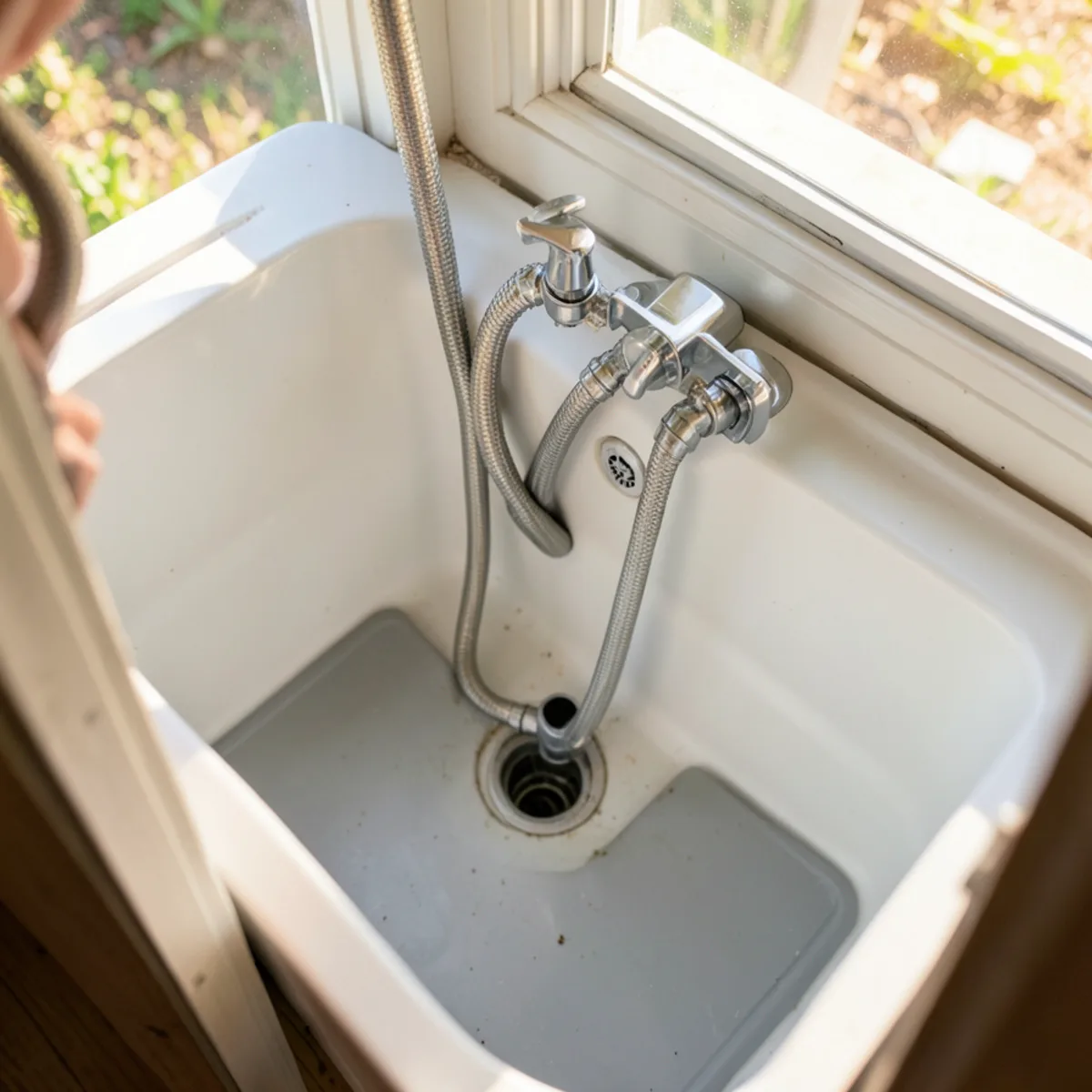
A leak under a kitchen sink is the most common way a single cabinet gets ruined. Caught early, the fix may be a new cabinet floor panel and a plumber’s repair. Missed for weeks, water can travel under the neighboring bases and into the subfloor or slab edge.
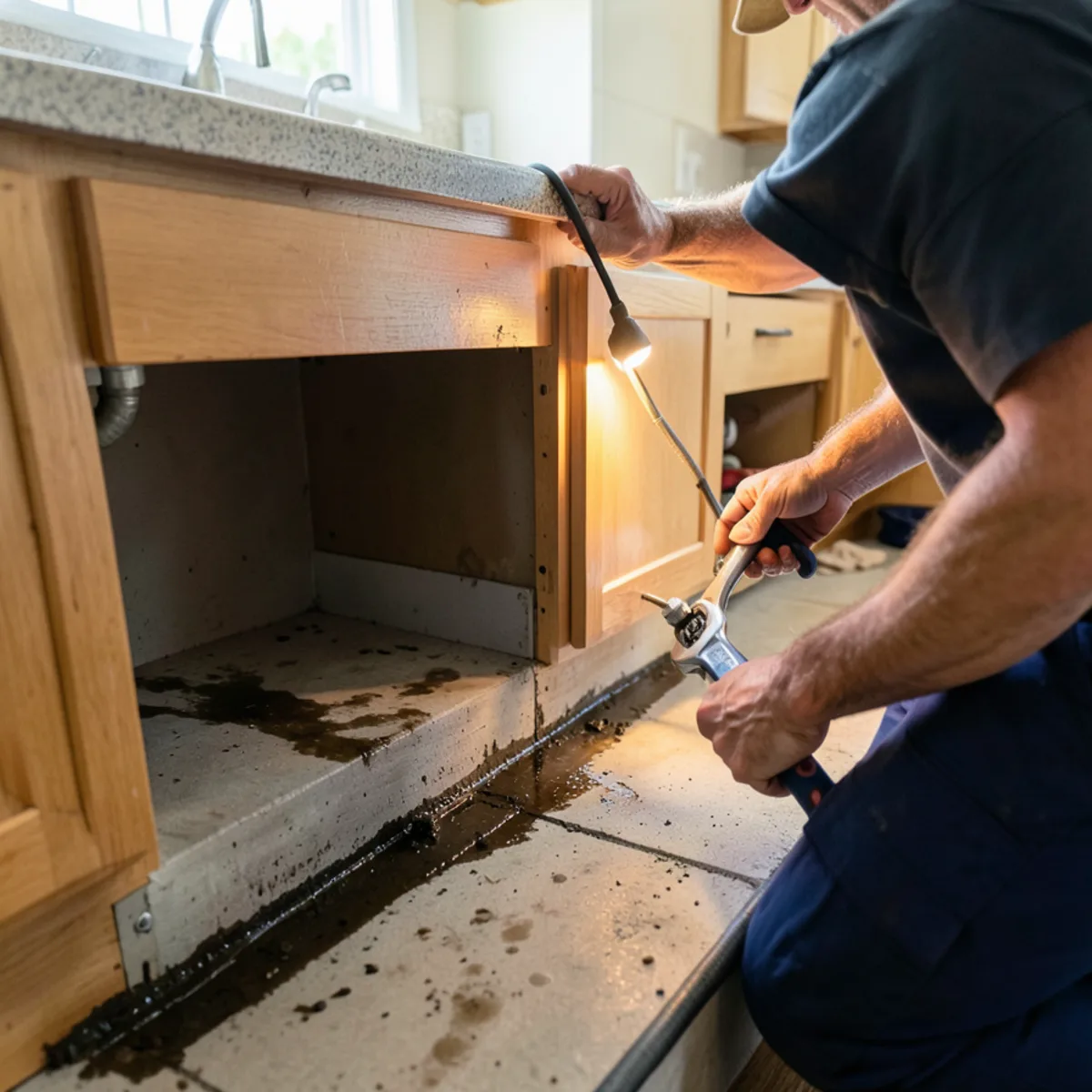
We see both versions in older housing stock: 1960s ranch kitchens in Bradenton and seasonal condos around Venice, where a drip can run for months while owners are away. When more than one or two boxes are affected, our storm and water damage cabinet replacement service covers measuring and replacing the damaged run.
How Do You Keep a Repaired Sink Base From Getting Wet Again?
Most repeat damage starts at the same supply lines and drain joints as the first leak. A few habits stop a small drip from becoming another replacement:
- Keep indoor relative humidity below 60 percent, ideally between 30 and 50 percent, the range the EPA recommends to limit mold growth.
- Replace old supply hoses, and make sure the shutoff valves under the sink turn freely so you can close them in seconds.
- Put a battery leak sensor on the sink base floor and under the dishwasher edge; it sounds an alarm long before a stain shows.
- Use a fitted drip tray or sealed liner in the sink base so small leaks pool where you can see them.
- In a seasonal home, shut off the main water valve before you leave for the summer.
From our design team: when only one or two cabinets are ruined
At the technical visit we measure the damaged boxes and the openings they sit in, because a replacement only works if it fits the existing countertop and the cabinets on either side. Modular construction lets us size a new sink base to the inch, so the stone above it does not need to move if it was supported properly during removal.
Matching is the harder part. Older door styles and finishes may no longer be made, and a new white door rarely matches one that has aged for fifteen years. In those cases we show you in the 3D presentation what a partial replacement would look like next to a full one, so the decision is based on how the room will actually look.
Timing also changes our advice. A cabinet that was wet for a weekend and dried with fans is a different case from one that sat over a slow drip for a season, even if both look similar on the surface. We ask when the leak started, press every panel near the floor and check the wall behind the toe kick before we suggest repairing anything, because a new floor panel on top of a soft box only delays the replacement.
Questions readers ask
Can swollen particleboard be dried and sanded flat?
No, not in a way that lasts. Once particleboard swells, the glue bond between wood particles is broken, so it stays thicker, weaker and more absorbent even after drying. Sanding removes the visible bump but leaves soft material underneath that will not hold screws or hinges. In a Florida kitchen a swollen base panel usually means a new box.
Will drying fans save cabinets after a dishwasher leak?
Fans help if they start within a day or two and the water was mostly clean. Pull the toe kick or remove the dishwasher so air reaches the floor under the cabinets, and run a dehumidifier because Florida air holds a lot of moisture. If the bases still swell or smell musty after a week, they likely need replacement.
Is a small amount of mold under the sink a reason to replace the cabinet?
Not always. A small patch on a sealed, solid surface can often be cleaned once the leak is fixed and the area is dry, following EPA guidance. Mold that has grown into particleboard, or keeps returning, means the material should go. We check the sink base and its neighbors during the technical visit before recommending anything.
Can I replace only the sink base and keep the rest of my kitchen cabinets?
Often, yes, if the neighboring boxes are dry and firm and the countertop can be supported while the sink base is swapped. The limit is appearance: a new door beside fronts that have aged for years may not match. At the technical visit we measure the opening, and the 3D presentation shows the new base next to your existing doors.
Should a plumber or a cabinet company come first after a leak?
The plumber comes first. The leak has to be repaired and the area dried before anyone can judge the cabinet, and any work on supply or drain lines in Florida belongs to a licensed plumber. Once the source is fixed, we can measure the damaged boxes and plan a replacement that fits around the repaired plumbing.
The bottom line
Clean water, fast drying and solid box material give cabinets a real chance; contaminated water, swollen particleboard and recurring mold do not. Check each cabinet on its own merits before deciding on the whole kitchen.
If the checklist points toward replacement, call (239) 545-0550. We will measure, show you partial and full options in 3D, and plan the installation around your repairs.

Written by the FT Cabinetry design team
We design, supply and install custom modular cabinets from our Sarasota location at 2235 6th St. This guide reflects what we check at technical visits and installations; verify code and permit details with your building department. About FT Cabinetry.
Sources
Related services
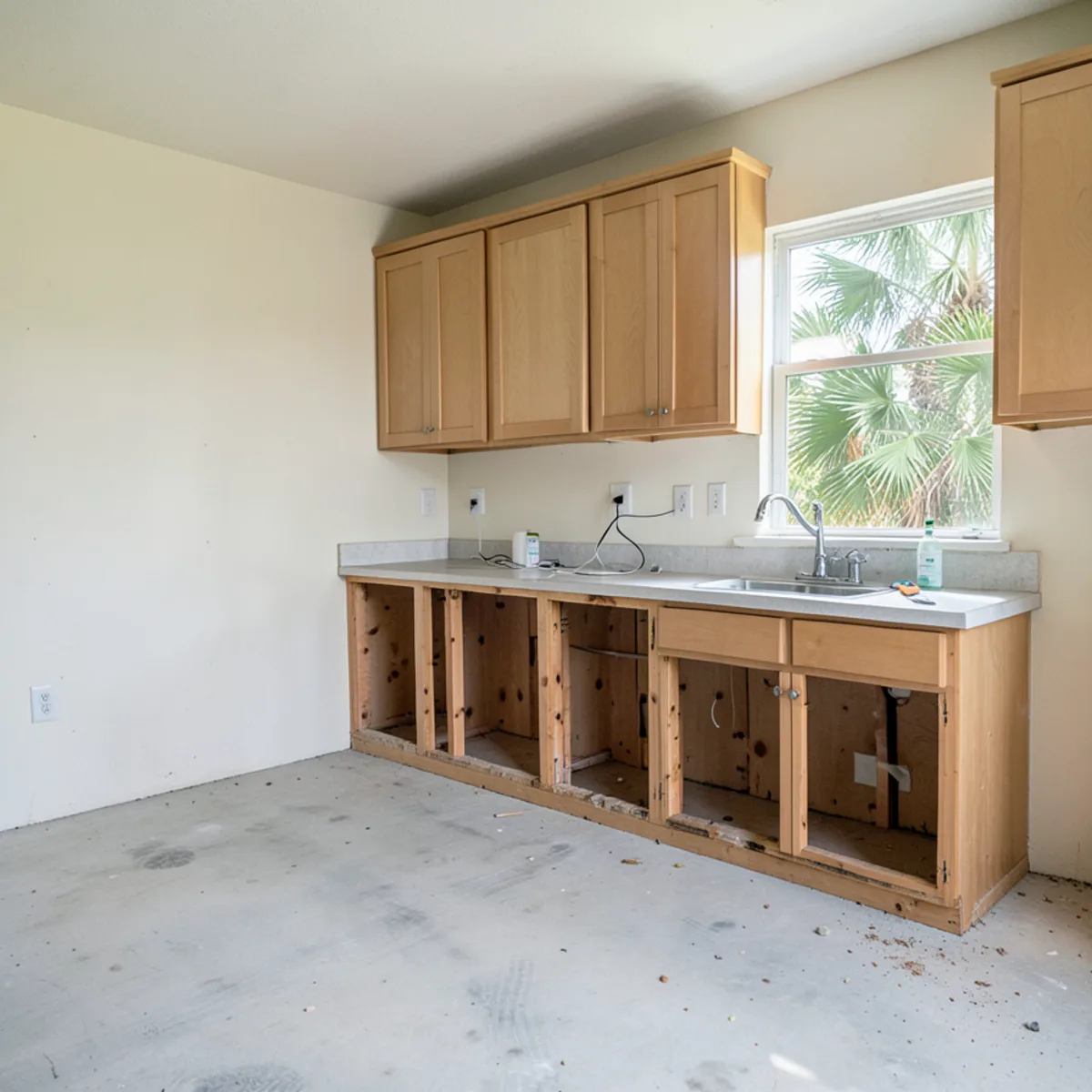
Storm Damage Cabinet Replacement
After a hurricane or flood: measured once the room is dry, redesigned in 3D and replaced with custom modular cabinets.
Learn more →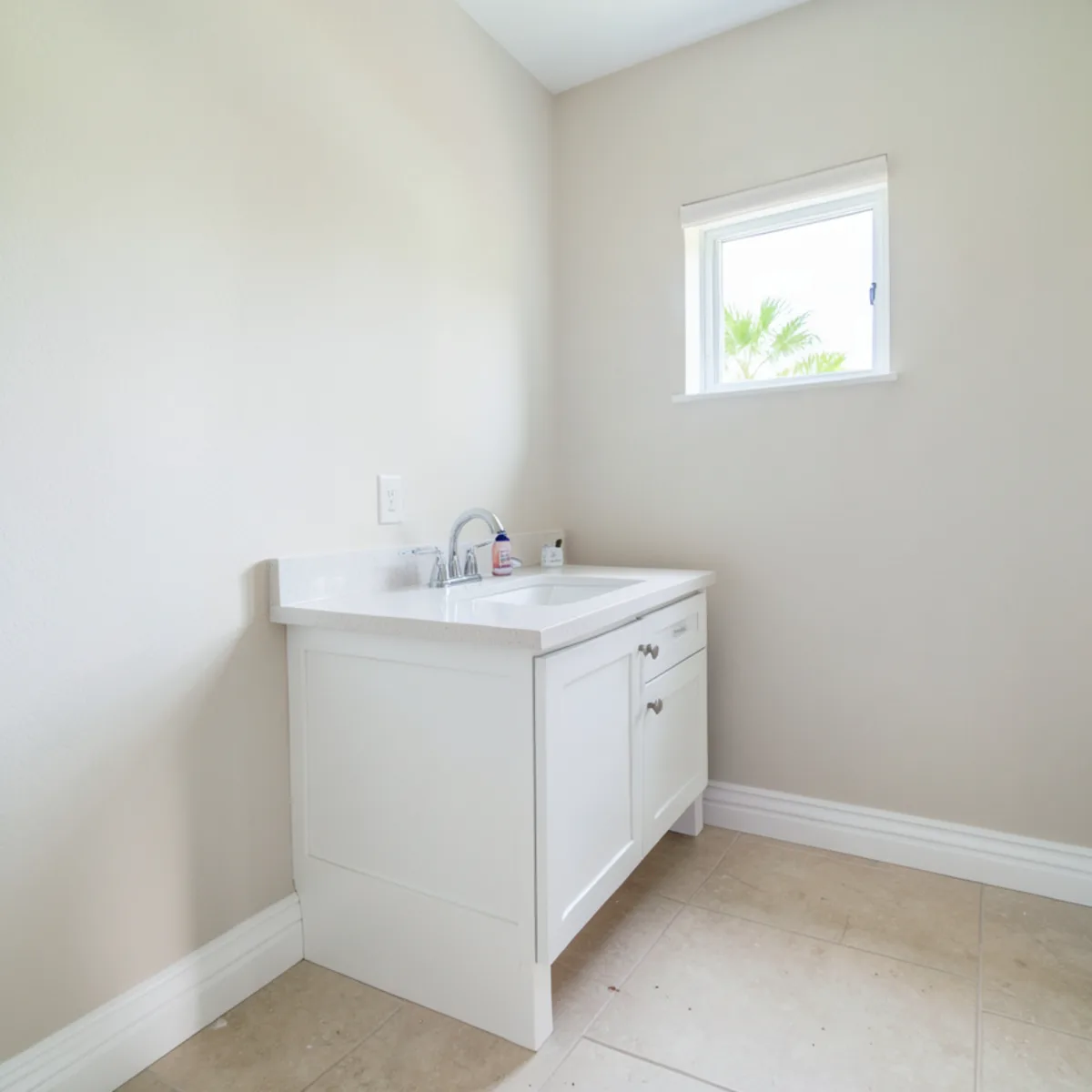
Water-Damaged Bathroom Vanities
Swollen, musty or delaminating vanity after a leak or flood? We measure, design and install a custom replacement.
Learn more →Keep reading
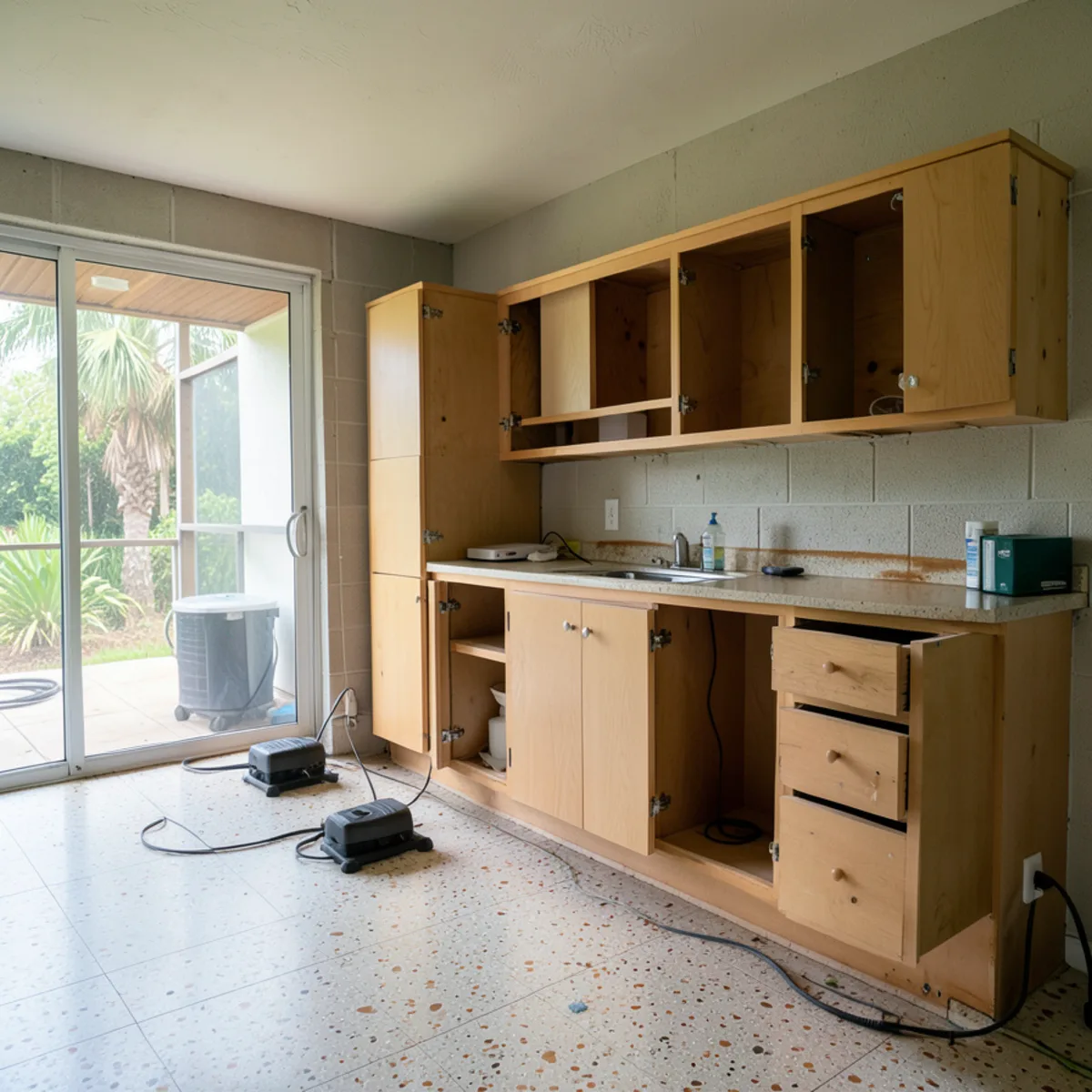
Flood-Damaged Kitchen Cabinets: What to Do First
After storm surge or a flood reaches the kitchen, the order of your first moves decides how much can be saved and how fast the room can be rebuilt.
Read the guide →
Hurricane Prep Checklist for Kitchens and Bathrooms
A room-by-room plan for protecting kitchen and bathroom cabinets, appliances and plumbing before a Gulf storm, so recovery starts faster.
Read the guide →